






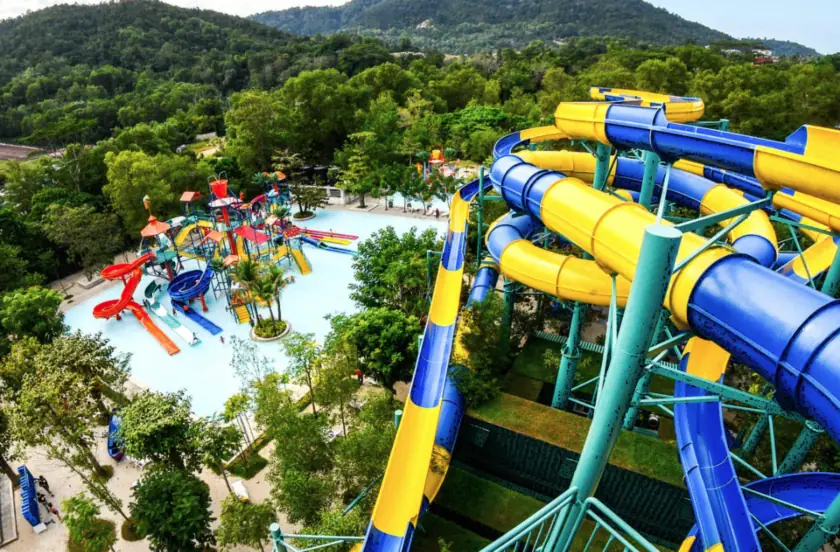
Slip, Scream, Sue: Understanding Voluntary Assumption of Risk after an Amusement or Water Park Injury
Read Before You Ride!
If you’re planning a family trip to a waterpark or a day at the amusement park with friends, it’s important to understand what you are agreeing to before hopping on your first ride.
Did you collide with another rider or fly off the end of a waterslide? Were you trampled in a wave pool that was overcrowded? Or did you get pushed off the go-cart track and get ejected from your car? You may believe the park is responsible but pursuing a claim is often far more complicated than it seems.
Under Ontario’s Occupiers’ Liability Act, visitors are generally considered to accept the inherent risks associated with amusement park rides and attractions because they willingly choose to participate. This is known as voluntary assumption of risk.
Some higher-risk attractions may require you to sign a liability waiver before participating. But does that mean you can’t sue if you’re injured? Not necessarily.
What is Voluntary Assumption of Risk?
Voluntary assumption of risk is a legal defence that may prevent an injured person from receiving compensation if they knowingly and willingly accepted the risk that caused their injury.
The defence can arise in two ways:
- Expressly, by signing a liability waiver or written agreement; or
- By implication, when a person’s words or conduct show they understood and accepted the risk.
To succeed, the park must prove that the injured individual:
- Voluntarily chose to accept the risk;
- Fully understood both the physical risks and the consequences of accepting them; and
- Agreed to engage in those risks without expecting the park to be legally responsible if an injury occurred.
Accepting Risk Does Not Mean Accepting Negligence
Buying a ticket or signing a waiver does not automatically protect an amusement park from liability.
When you ride a roller coaster, you accept the ordinary risks that are part of the experience; the sudden drops, sharp turns, rapid acceleration, and similar movements. Those are inherent risks.
You do not accept injuries caused by negligence. For example, an amusement park or waterpark may still be liable if your injury resulted from:
- Defective safety restraints;
- Poor maintenance;
- Mechanical failures;
- Inadequate operator training; or
- Other unsafe conditions that could have been prevented through reasonable care.
In other words, while you assume the risks that are part of the experience, you don’t assume the risks created by someone else’s negligence.
Staying Safe at the Park
Although every ride involves some level of risk, a few simple precautions can help you avoid unnecessary serious injuries:
- Read and follow all posted ride instructions.
- Respect height, weight, age, and health restrictions.
- Secure loose belongings before boarding a ride.
- Walk instead of running on wet surfaces.
- Stay hydrated and take breaks throughout the day.
- Immediately report unsafe conditions or malfunctioning equipment to park staff.
- Never ride while under the influence of alcohol or drugs.
A little caution goes a long way toward making sure your biggest adrenaline rush is the ride itself.
Injured at an Amusement or Water Park? Call McNally Gervan
Every injury is different, and whether you have a legal claim depends on the specific facts of your case. Even if you’ve signed a waiver or assumed certain risks, that does not necessarily mean you’ve given up your right to seek compensation.
If you or a loved one has been injured at an amusement or water park, the personal injury lawyers at McNally Gervan can help you understand your legal options. Contact us today to schedule a consultation.


Follow Us